3: Mindfulness of thoughts & emotions
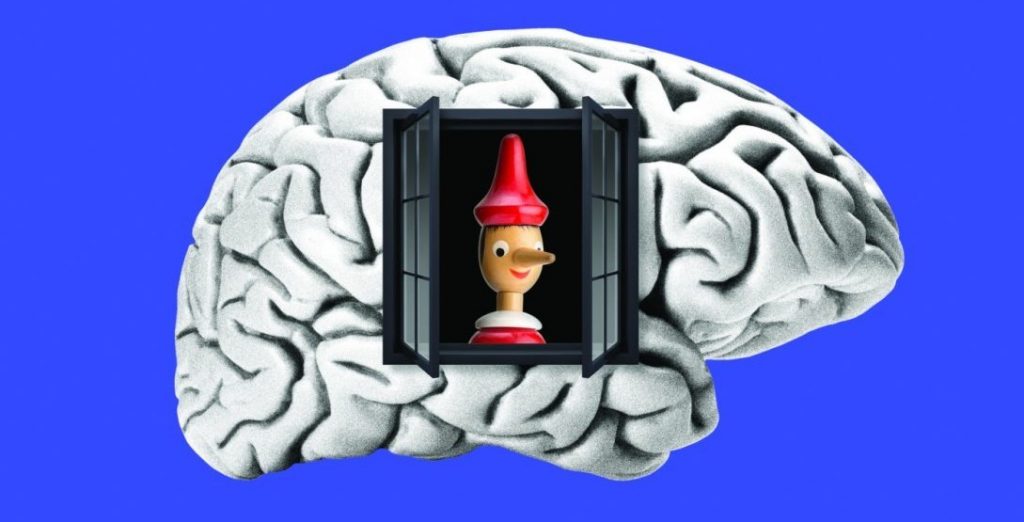
“It is remarkable how liberating it feels to be able to see that your thoughts are just thoughts and that they are not ‘you’ or ‘reality.’ For instance, if you have the thought that you have to get a certain number of things done today and you don’t recognize it as a thought but act as if it’s the ‘the truth,’ then you have created a reality in that moment in which you really believe that those things must all be done today” Jon Kabatt Zinn
“Instead of ‘turning away’ from pain in avoidance we can learn to gently ‘turn towards’ what we’re experiencing. We can bring a caring open attention towards the wounded parts of ourselves and make wise choices about how to respond to ourselves and to life. It’s a paradox that we all must understand: It is by turning towards negative emotions that we find relief from them – not by turning away” Eckhart Tolle
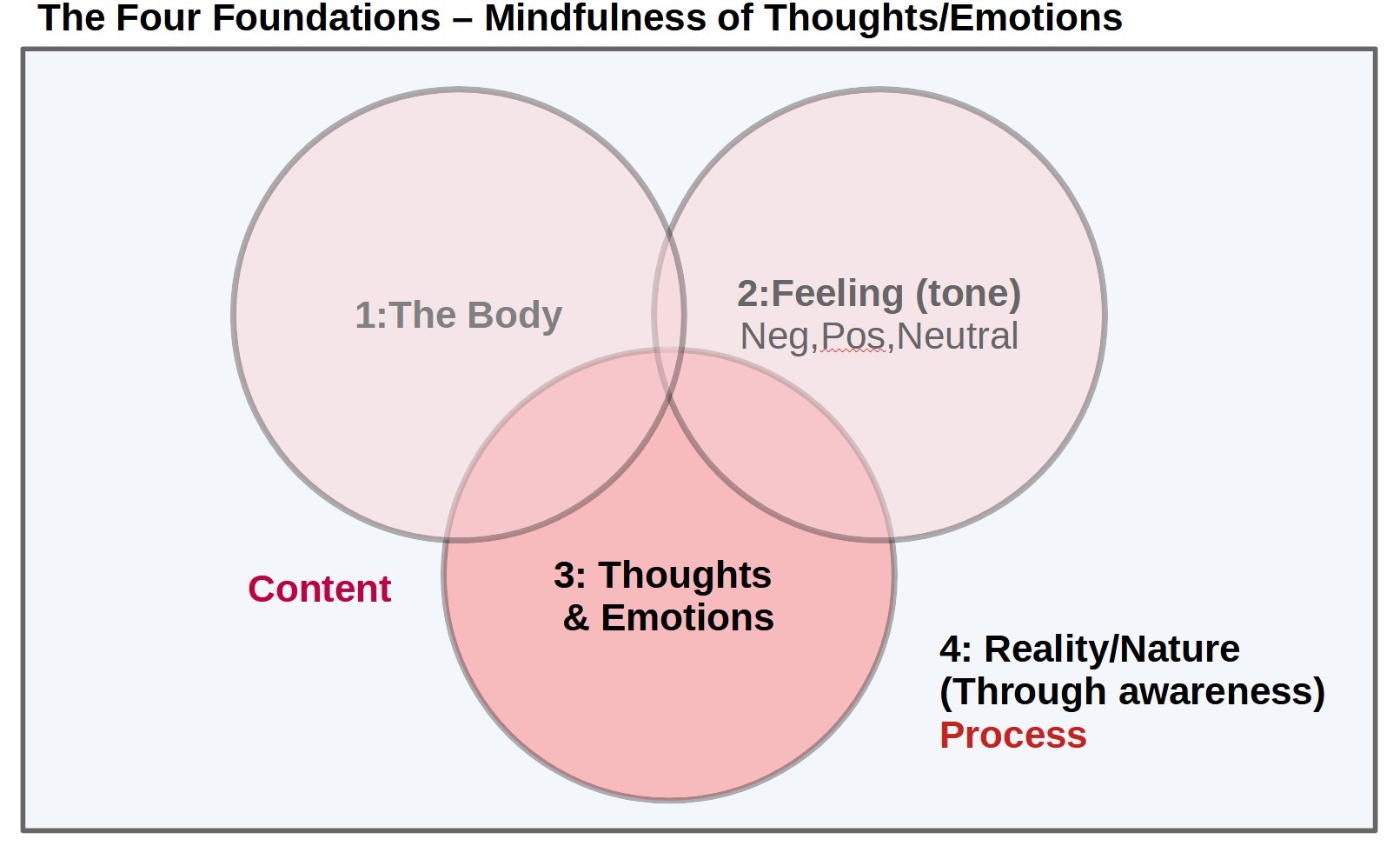
Mindfulness of thoughts – the third foundation
Thinking is the aspect of mind that we use throughout the day to live our life, thinking through situations, decisions, projects; it is essential, necessary, and often very helpful. Equally, as you might have noticed, it also has the potential to be problematic: busy, distracting, exhausting, and even overwhelming.
Most of us strongly identify our very being with our thoughts. We see them as MY thoughts and if they are challenged we frequently feel fearful and defensive. Thoughts also have the power to influence our emotions and our actions. For this reason what we think is critical to our wellbeing.
So if they so important how can we learn more about them and gain some influence over them?
Meditation practice offers a route to gaining insight into our thoughts along with associated emotions and events in the mind.
The practice involves stepping back from our thoughts and observing them from “outside” thinking. That sounds like an impossible thing to do, but it turns out that with practice it is doable and beneficial.
There are many metaphors that point to this possibility and how it is achieved. The great Zen teacher Shunryu Suzuki likened the busy thinking mind to a “Small Mind” and the experience of being outside thought as the “Big Mind”
Small Mind describes the thinking mind—our intellectual mind, the aspect of mind that we are perhaps most familiar. It is the aspect of mind that we use throughout the day to live our life. It’s not inferior but it is no “all there is”.
Big Mind, on the other hand, refers to the quality of awareness—the aspect of mind that allows us to be aware of thoughts as they arise. You may have noticed while meditating that we have the ability to see thoughts not only as we replay them, but also in the moment itself, as they arise. This is awareness—this is Big Mind—and it tends to feel quite spacious, leaving us feeling more at ease.
By nature, this aspect of awareness is free from opinion, belief, or judgment; it simply witnesses the mind as it is in the moment, whether there are many thoughts, few thoughts, or no thoughts at all. And because it is witnessing rather than being involved, it gives us the impression of having stepped back and zoomed out, shifting our perception of the mind.
That does not mean the mind will be empty—thoughts will still appear—but we are not looking to engage with these thoughts. We are training the mind to no longer chase every thought we like, and to no longer resist every thought we don’t like. Instead, we are learning to familiarise ourselves with the quality of awareness.
In order to shift into “Big mind” there are again several metaphors that can help. Here is one I like:
Imagine yourself sitting on a bench in a motorway rest stop. You can see all sorts of cars and lorries going by. Some large, crawling along in the slow lane. Some small and quick in the fast lane. You look up at the sky a take in the landscape through which the motorway passes. The vehicles are like your thoughts comings and going in the wider landscape (Big Mind) Now and then a vehicle catches your attention or maybe even pulls up and invite you for a ride (Small Mind) but you can choose to decline and carry on observing the cars (your thoughts) come and go with a detached, kindly curiosity.
Through this process of quiet observation, new kinds of understanding can emerge. You don’t need to fight with thoughts, suppress them or judge them. Rather you can simply choose not to follow thoughts once you become aware that they’ve arisen.
It’s not always easy because we have had years of being caught up in our thoughts and identifying with them so strongly. So take it gently and always be kind to your mind.

Why thoughts AND emotions?
Emotions are included in this practice because they are often intimately bound up with our thoughts. We know from our own experience that a thought can easily give rise to an emotion. Try bringing to mind your least favourite politician and notice the cocktail of emotions that flow from that thought!
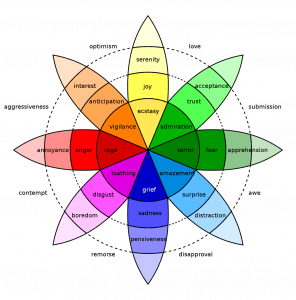
I call it a “cocktail” because emotions have complex dimensions and are not static. Take a look at Wheel of Emotions diagram (below) by psychologist Robert Plutchik. Do you recognise these?
Equally emotions give rise to thoughts. We may first become aware of an emotion through our bodies. It might be queasy feeling in the stomach or wrinkling of the nose in disgust or a light feeling in the heart area when we see someone we like or love.
Naturally we are moved to take some action in response to our emotion. We might hit out at someone if we are angry or want to hug someone of we feel tenderness. Our actions in turn also give rise to emotions or may reinforce them.
It’s important to know about this complex back-and-forth relationship between emotions and thoughts. It’s even more important to know that emotions, thoughts, and actions all influence one another.
This means that you can change how you feel by changing what you do and how you think. This doesn’t mean that you just need to think positively or do fun things, and all of your emotional problems will be solved, but chipping way at enduring negative moods involves slow and steady changes in your activities and thinking patterns.
The practice of emotional awareness is summarised by Chogyam Trungpa
“Let yourself be in the emotion. Go through it, give in to it, experience it … then the most powerful energies become absolutely workable rather than taking you over, because there is nothing to take over if you are not putting up any resistance.”
This is amplified by Morrie Schwartz.
“Take any emotion – love for someone, or grief for a loved one, or what I’m going through – fear and pain from a deadly illness. If you hold back from the emotions – if you don’t allow yourself to go all the way through them – you can never get to be detached, you’re too busy being afraid. You’re afraid of the pain, you’re afraid of the grief. You’re afraid of the vulnerability that loving entails. But by throwing yourself into these emotions … you experience them fully and completely. You know what pain is. You know what love is. You know what grief is. And only then can you say, “Alright, I’ve experienced that emotion … now I’m free to detach from that emotion…”
Note on Feelings: You can see that emotions are more complex than the basic three feeling tones described in the Mindfulness of Vedana Foundation. Thinking, emotions and actions flow from our first split second reaction to something. It is at that point when we have a chance to alter our behaviour.
Practices and Investigation – Week 3
Practice: Try out each of the audio guided practices at least ther times during the week. Every day would be great but I know that;s nit always possible.
Investigation: Bring your attention to your thoughts and emotions (in the present) whenever you can. Notice when you become conscious of them, notice when they pass out of the mind. Remember to note your reaction to them (Vedana) Like, dislike or neutral.
Audio Practice Tracks
Sounds and Thought practice (10 min)
Thoughts and Emotions Practice (20 min)
Choiceless Awareness Practice (10 min)
Video: Mindfulness of thoughts
Video: Mindfulness and emotions
Further reading
ZEN Mind, Beginner’s Mind (Shambhala Library): Informal Talks on Zen Meditation and Practice Hardcover – Shunryu Suzuki