Week 2 – Mindfulness of the Body

“The body is always in the present. When we take our attention to body sensations, we’re naturally drawn to the here and now. You can’t feel yesterday or tomorrow, only right now. The body thus is a natural anchor for mindfulness, when we pay attention to it” Ed Halliwell
“When you sit down to meditate, you might expect to become peaceful and quiet, but often the first thing you actually experience is tightness and pain in the sensations of your body. You become aware of all the tensions you are carrying” Jack Kornfield
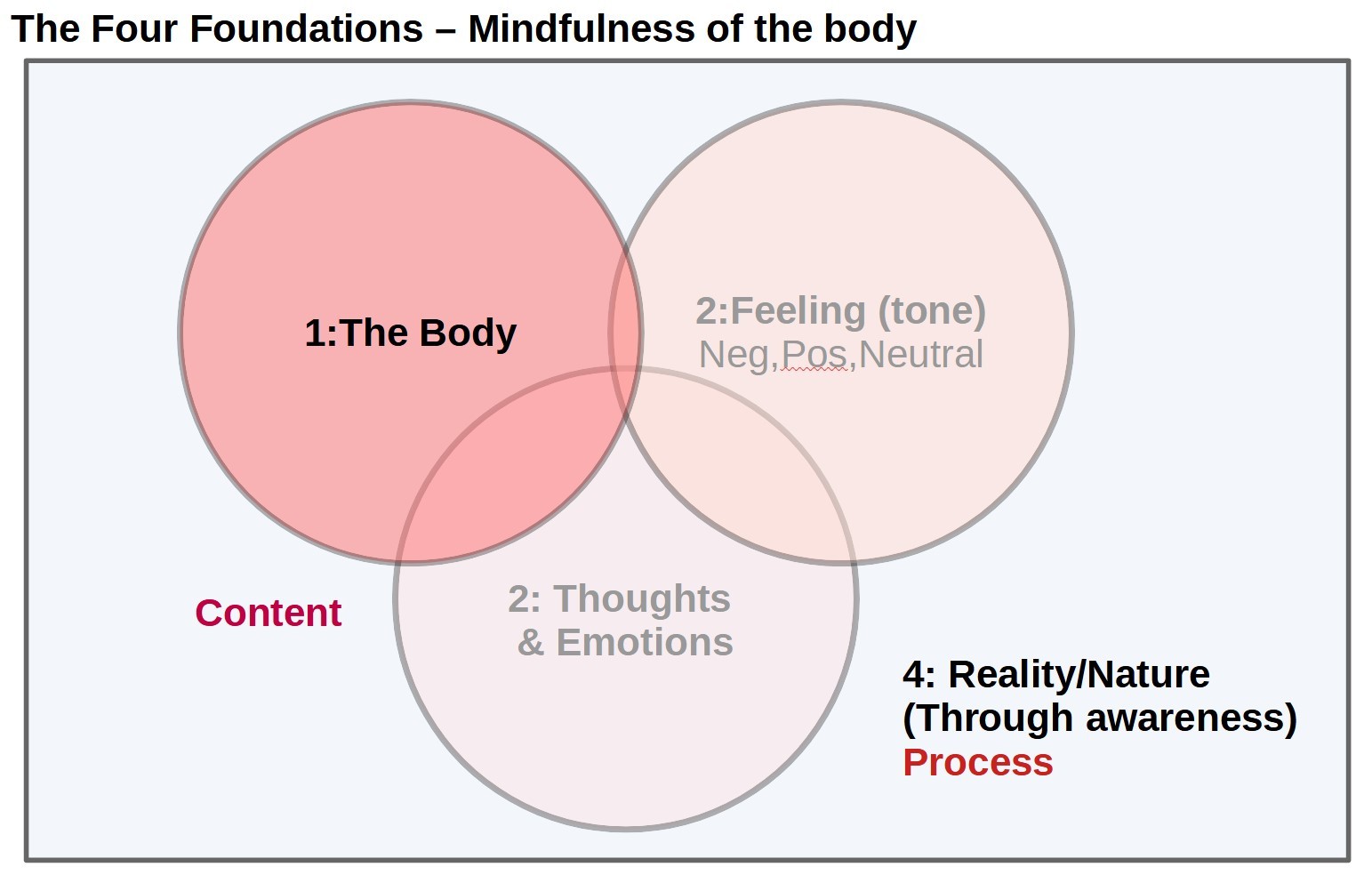
Why bring mindfulness to the body?
1. The human body is a staggeringly wonderful thing, and yet we so often take what it does for granted—we move around, carry things, make things, see, hear, speak, feel and taste, often without appreciating how this all happens. When things feel right with the body, we take it for granted. When things feel wrong, we get frustrated. And yet, just by breathing, the body is performing magic every moment. Alive, the body is a miracle. This is true, even when we’re not feeling how we’d like to feel. Practicing mindfulness enables us to appreciate the remarkable reality of being a body.
2. In our bodies, we can feel the sensational joys of living, beneath the dulling layers of concept that can cloud their vividness. When we practice mindfulness, we’re opening ourselves to the full experience of being alive, with all the joy that can bring. I
3. The body is always in the present. When we take our attention to body sensations, we’re naturally drawn to the here and now. You can’t feel yesterday or tomorrow, only right now. The body thus is a natural anchor for mindfulness, when we pay attention to it.
4. Attending to the body has a grounding effect. When we bring awareness to the body, we’re getting down to earth. The body has weight—it offers a good counterbalance to the flighty mind that’s continually zooming off into ideas and ruminations. Mindful of the body, we’re recalibrating our centre downward.
5. The body experiences by feeling, so by becoming familiar with patterns of physical sensation, we can more easily work with them. If our body is in pain and we try to ignore it, resist it, or ruminate on it, we’re trying to live outside physicality. This is a recipe for fractured living. Mindfulness of body invokes a peace that doesn’t depend on things being pleasant.
Homework Week 2
- FORMAL: Try to find time to practise some sitting meditation every day. Using the Audio Guide “Mindfulness of Body and Feelings” 3-4 times during the week and whatever preferred practice you use at other times. The 10 minute Mindfulness of Breathing Guide is also available for you to use.
- INFORMAL: Bring your attention to your body and breath whenever you can. Maybe choose a regular daily activity like taking a shower or making coffee. Pay attention to the experience of walking, moving or running whenever you can.
Audio Practice Tracks
Body and Feelings Practice
Mindfulness of Breathing
Walking Practice Instruction
Further reading
Breath by Breath: The Liberating Practice of Insight Meditation by Larry Rosenberg, David Guy
Research papers
Mindfulness, Interoception, and the Body: A Contemporary Perspective, Jonathan Gibson
Recommended videos
1: Does mindfulness-based somatic awareness (cultivated through attention to breath, body sensations) change the brain? Catherine Kerr, Director of Translational Neuroscience, Contemplative Studies Initiative Assistant Professor (Research) Brown University US. WATCH 15:20mins
2: Neuroscientist Sara Lazar’s amazing brain scans show meditation can actually change the size of key regions of our brain, improving our memory and making us more empathetic, compassionate, and resilient under stress. WATCH 8:33mins